
Our Animals
Belted Galloway Cattle
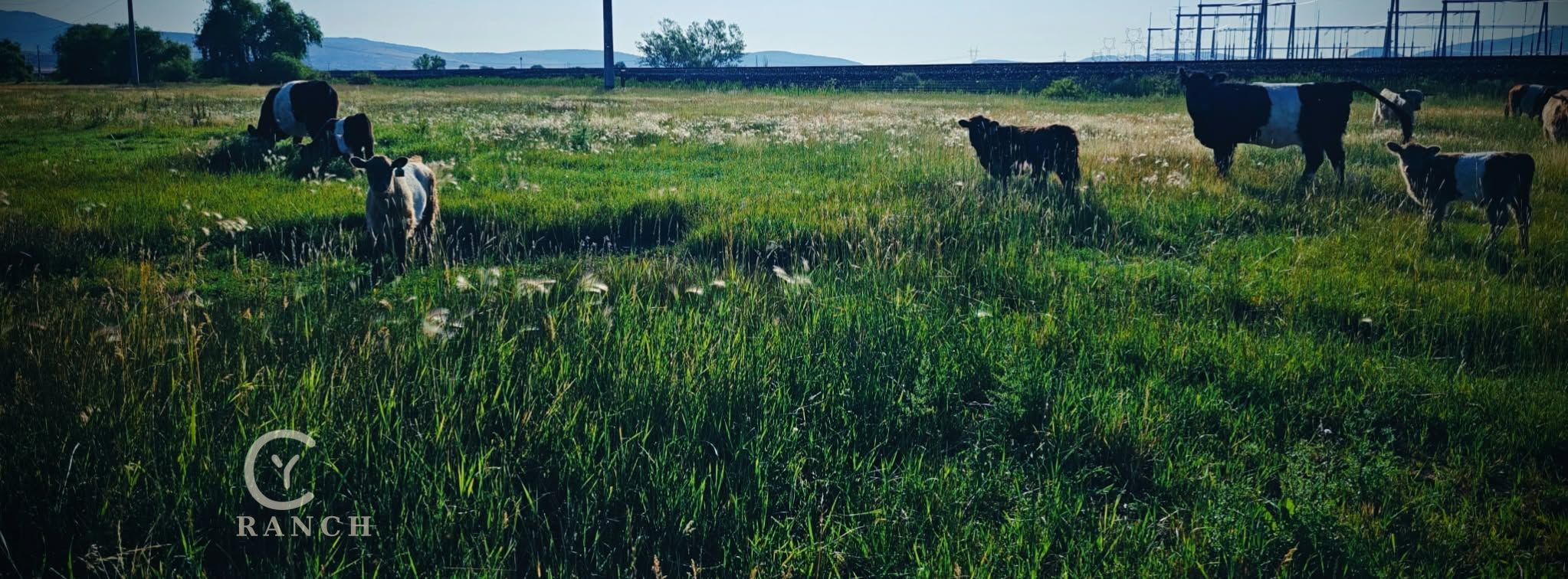
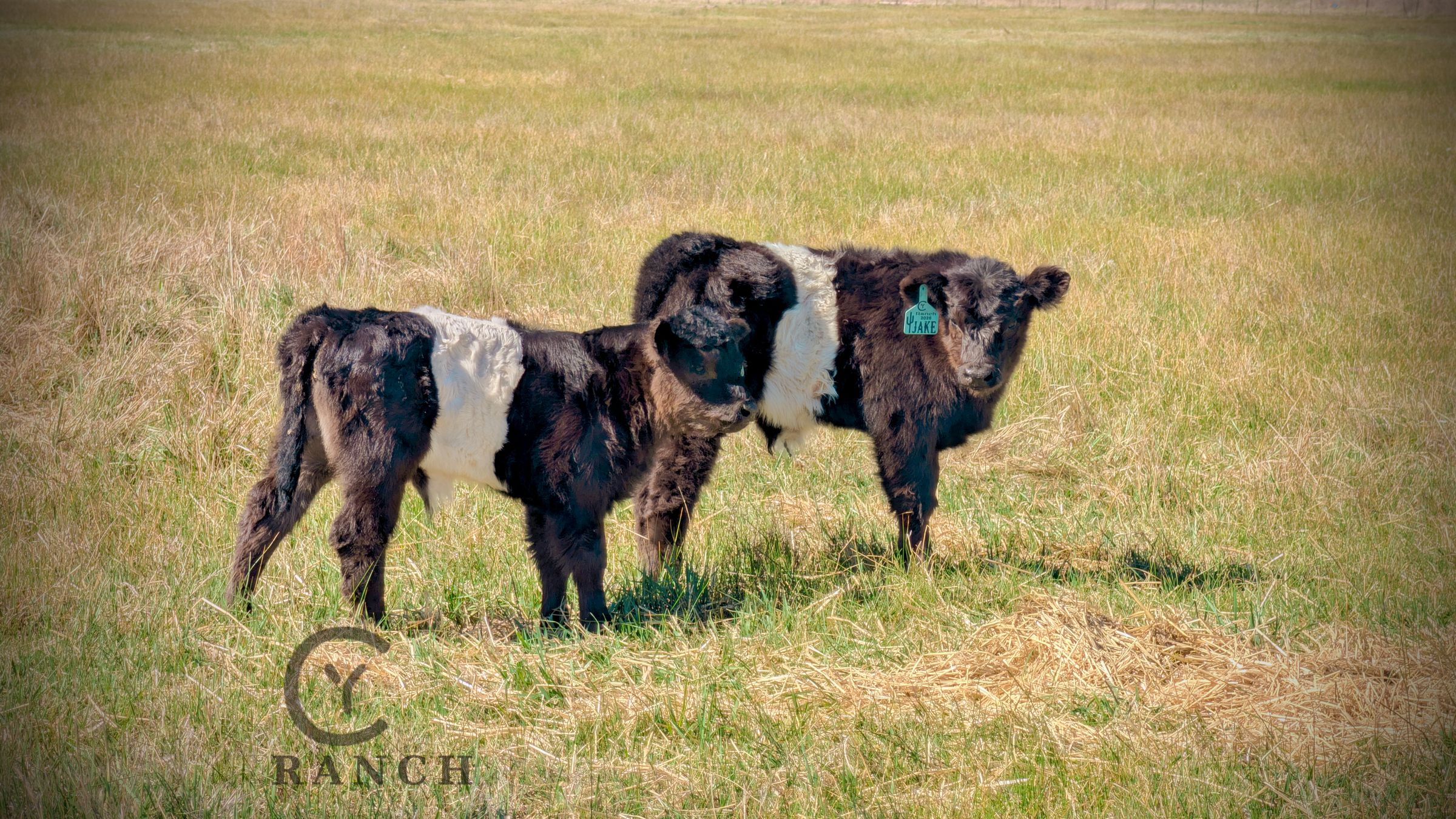
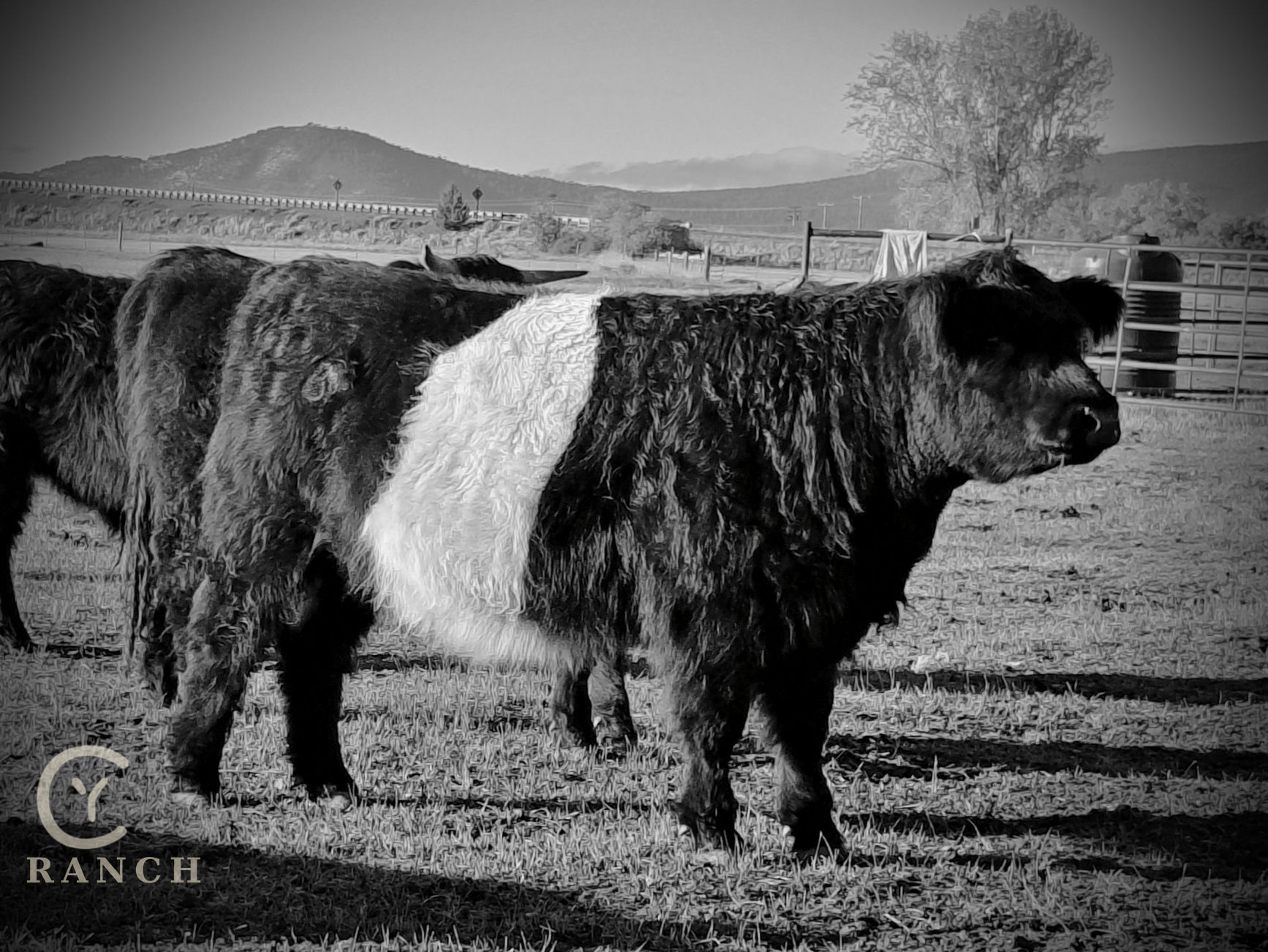
With a bright white belt wrapped around a deep black, red, or dun coat, Belted Galloways are instantly recognizable, even from the far side of a pasture.
Beneath that memorable pattern is a hardy, naturally polled Scottish beef breed shaped by rough country, changeable weather, and generations of careful selection.
From Scotland's southwest
History & Heritage
Belted Galloways grew from the historic cattle population of Galloway in southwestern Scotland, particularly the old counties of Kirkcudbright and Wigtown. Rocky hills, exposed coastal weather, and modest forage favored cattle able to stay productive in difficult country. Long before railways, drovers moved cattle east from Galloway and Dumfries toward distant markets; the British breed society records a tradition that a clearly marked Beltie helped drovers see which way the herd was facing in poor light.
The white middle is ancient, but its precise origin is not settled. One theory suggests that the Belted Galloway's distinctive white markings may have originated through historical crossing with Dutch Belted cattle, also known as Lakenvelders. However, the breed's exact origins remain uncertain, and this theory has never been conclusively established. Breeders formed the Dun and Belted Cattle Breeders' Association in 1921, giving the belted cattle an organized home for breed recording alongside their Galloway relatives.
More than a striking pattern
What Makes Them Special
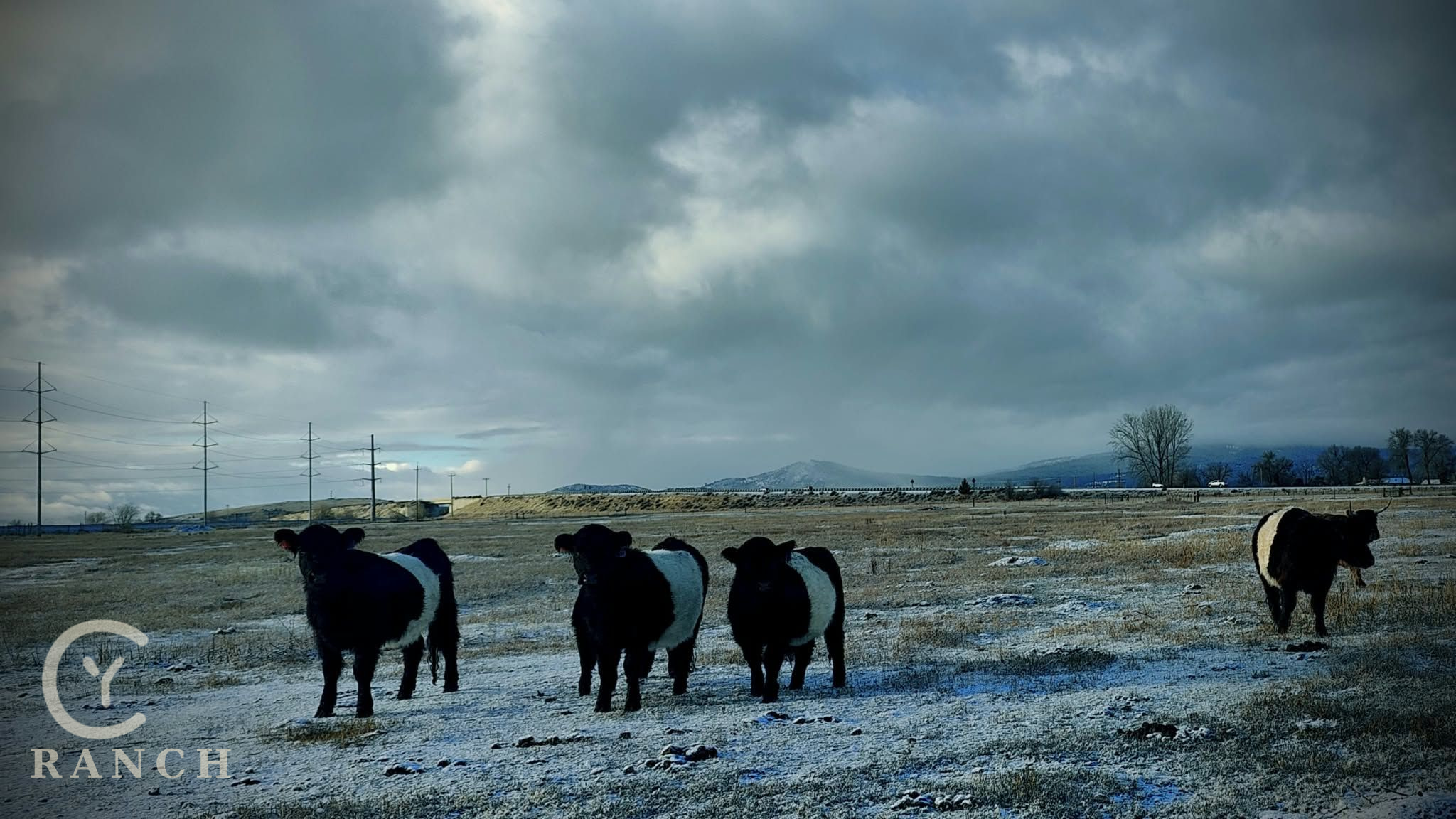
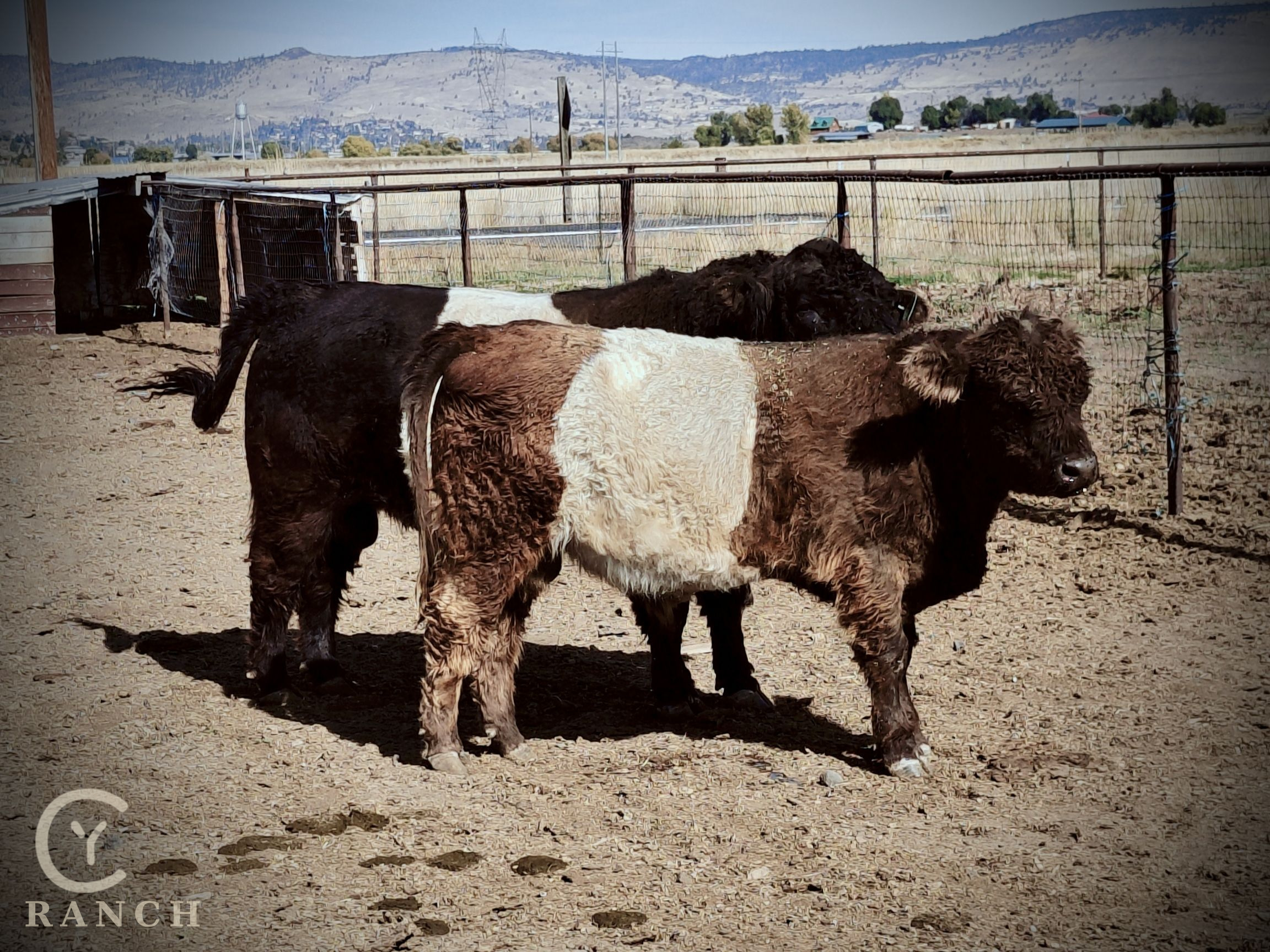
The breed's defining white belt circles the body between a black, red, or dun forequarter and hindquarter. Belted Galloways are naturally polled, and their weather protection comes from a dense insulating undercoat beneath a longer, shaggy outer coat rather than from heavy layers of external fat.
The same Galloway heritage is associated with hardiness, efficient use of varied forage, practical beef-cattle qualities, and attentive mothering. Those are breed tendencies, not guarantees about any individual animal or calving. Good breeding decisions, sound nutrition, and thoughtful handling still matter in every herd.
Records for the next generation
Registry & Preservation
Registration connects an animal to its documented parents and preserves information that responsible breeders can use across generations. Britain's organized Belted Galloway society began in 1921, and the first recorded importation to North America arrived in 1939. The American Belted Galloway Breeders Association was founded on July 1, 1951, and later incorporated as the Belted Galloway Society in 1964. Today, the society's Herd Book preserves information about identity, parentage, ownership, and breeders, helping maintain the established characteristics and genetic diversity of this distinctive heritage breed.
Why they belong here
The Oreo Cows We Never Forgot
About twenty years ago, our family regularly traveled roughly two hours to cutting-horse events. One stretch of that drive passed a ranch with Belted Galloways, and approaching it always brought the same anticipation: would the familiar black-and-white cattle be where we could see them? We affectionately called them the “Oreo cows,” and looking for them became part of the trip.
Then one day they were gone. After years of watching for that roadside herd, their disappearance was genuinely upsetting, and the memory stayed with us. Much later, after our family returned to raising cattle with Scottish Highlands, the opportunity finally came to bring Belted Galloways home to CY Ranch. It fulfilled a dream that had quietly followed us for decades.
As the ranch evolved, we chose to downsize our overall cattle numbers and focus on a smaller herd. Most of our Belties eventually moved to new homes, but that did not lessen what the breed means to us. We retained one Belted Galloway, and we remain hopeful that another little Oreo cow may be part of the ranch's future.
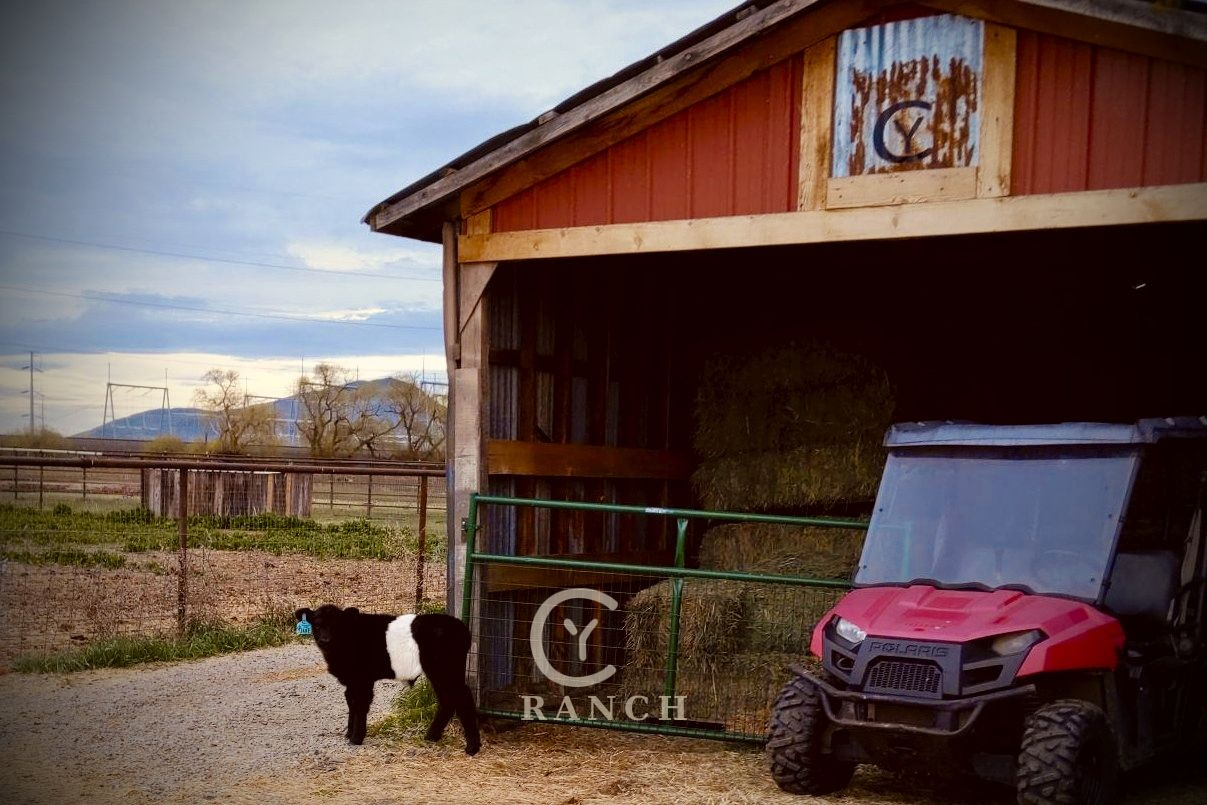
“The Oreo cows we never forgot.”
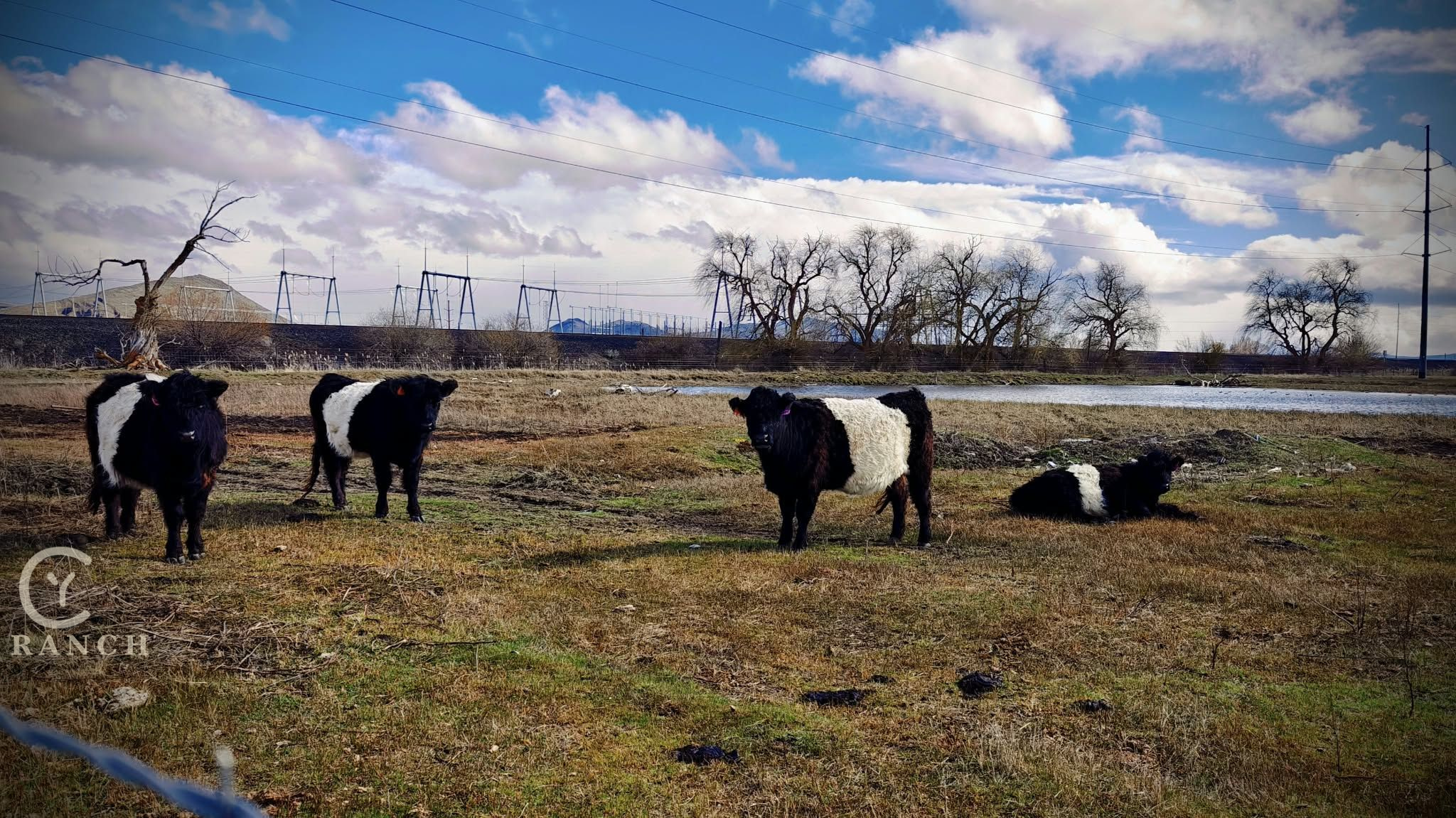

The herd
Meet Our Belted Galloways
Get to know the Belted Galloways who call CY Ranch home. Explore their public profiles, photographs, pedigrees, and current availability.