
Heritage sheep
Valais Blacknose Sheep
A Little Piece of the Swiss Alps
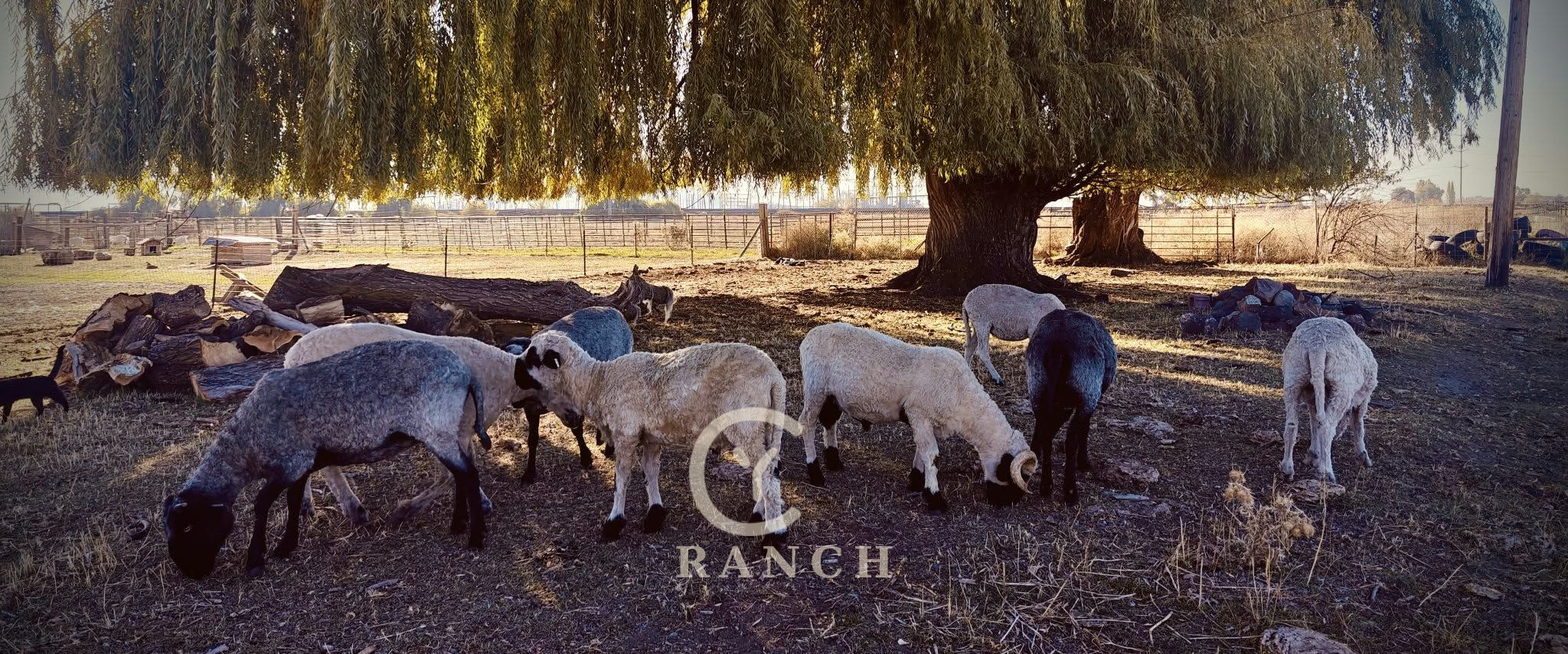
With their cascading wool, distinctive black faces, and magnificent curling horns, Valais Blacknose sheep are among the most recognizable heritage breeds in the world. Developed in the mountains of Switzerland and treasured for generations, these remarkable animals combine striking beauty with a history rooted in traditional Alpine agriculture.
At CY Ranch, our love for Valais Blacknose sheep began long before we ever had the opportunity to own one. What started as admiration for a breed halfway around the world has grown into a carefully planned breeding program and one of the most rewarding chapters of our ranching journey.
Centuries of Alpine heritage
Born in the Swiss Alps
High in the Upper Valais region of Switzerland, where steep mountain pastures, rocky terrain, and long winters have shaped agricultural life for centuries, generations of shepherds developed the Valais Blacknose sheep. Known in its homeland as the Walliser Schwarznasenschaf, the breed's history reaches back to at least the fifteenth century.
For generations, these sheep served a practical purpose in the mountain communities where they originated. Their strong bodies and sure-footed movement suited them to challenging Alpine grazing, while their substantial fleece and meat production made them valuable dual-purpose livestock. Although the breed is now celebrated internationally for its extraordinary appearance, those traditional agricultural qualities remain an important part of its identity.
The Valais Blacknose was formally recognized as a distinct breed in 1962. Its development and preservation have been guided by breeders who value the characteristics that distinguish it from other sheep, including its black facial markings, curling horns, abundant wool, balanced conformation, and strong foundation.
Long associated with the mountainous landscape of Switzerland, the Valais Blacknose remained relatively unfamiliar outside its homeland until international interest began bringing the breed to new countries. Today, that centuries-old Alpine heritage continues to guide breeders who are committed to maintaining its traditional character.
More than an adorable face
What Makes Them Special
Traditional appearance and conformation
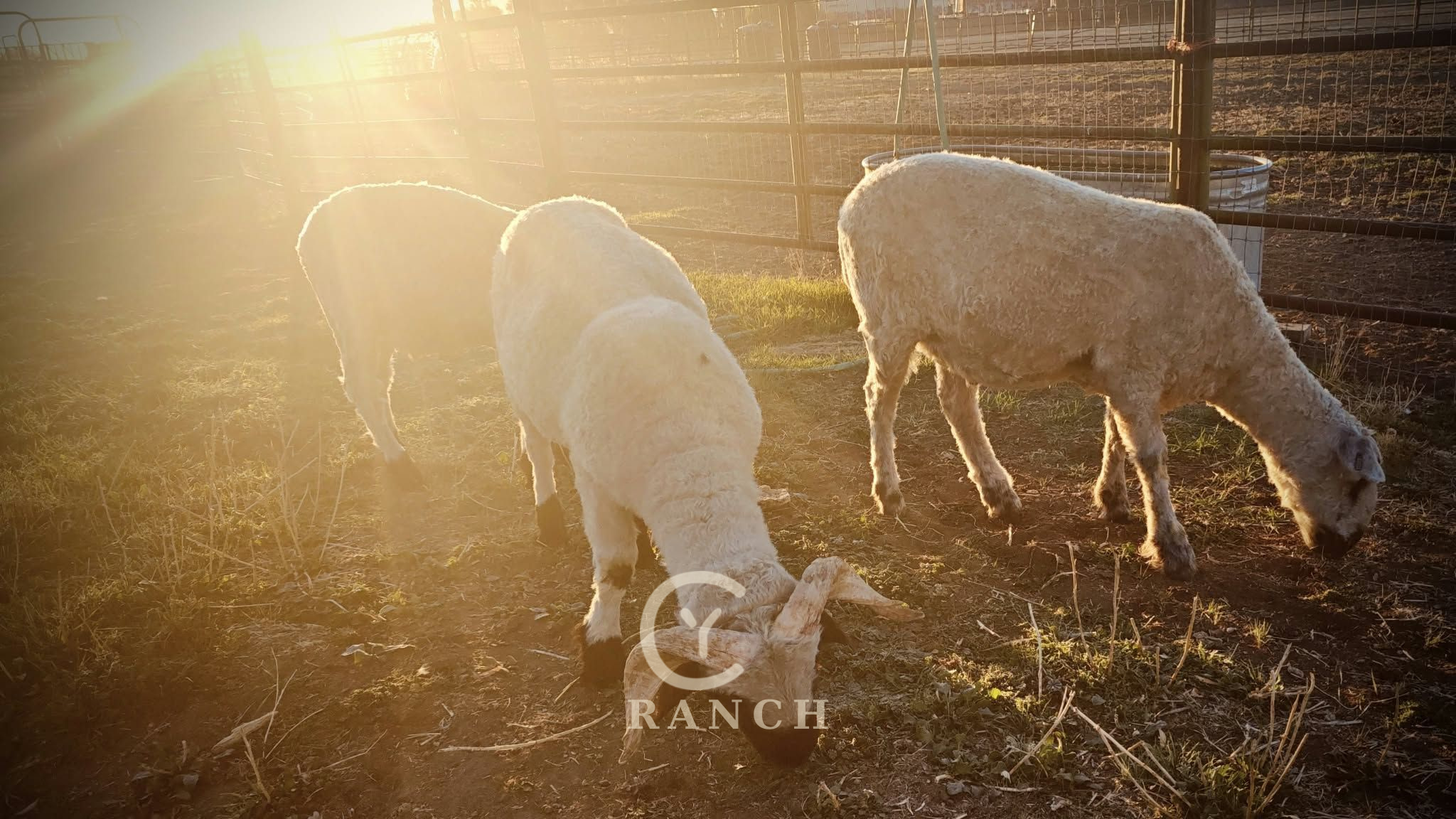
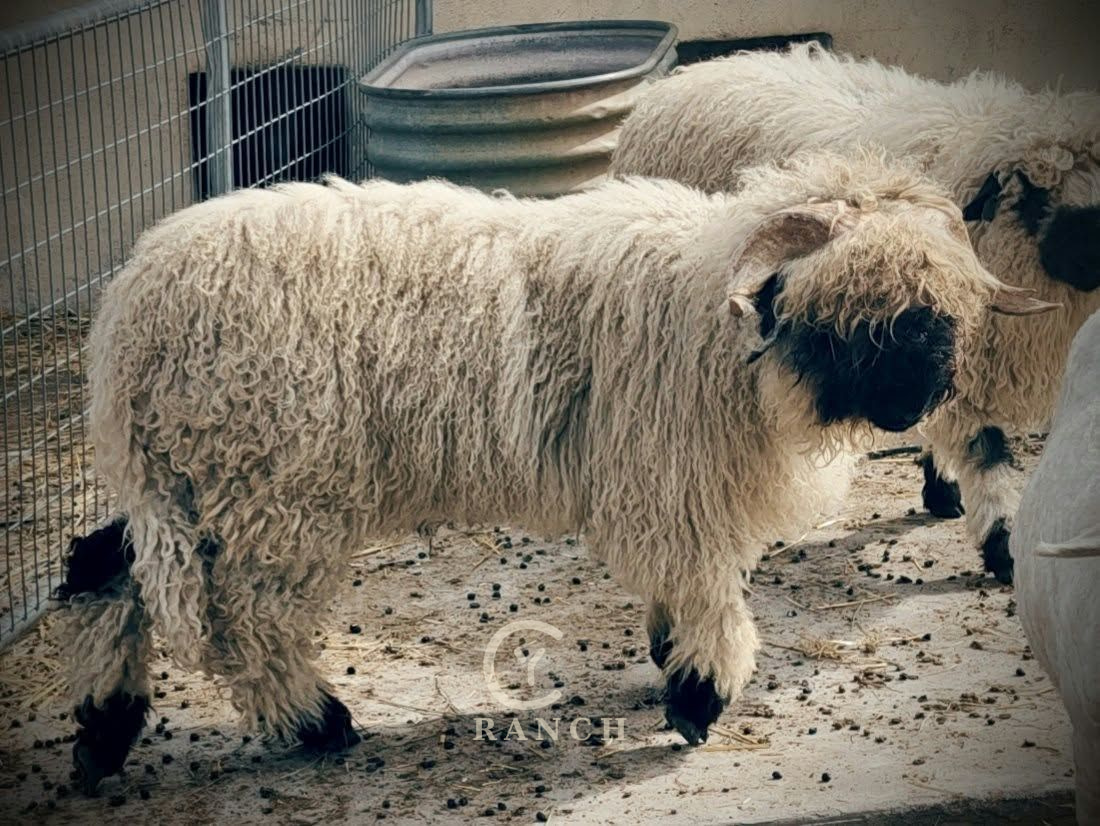
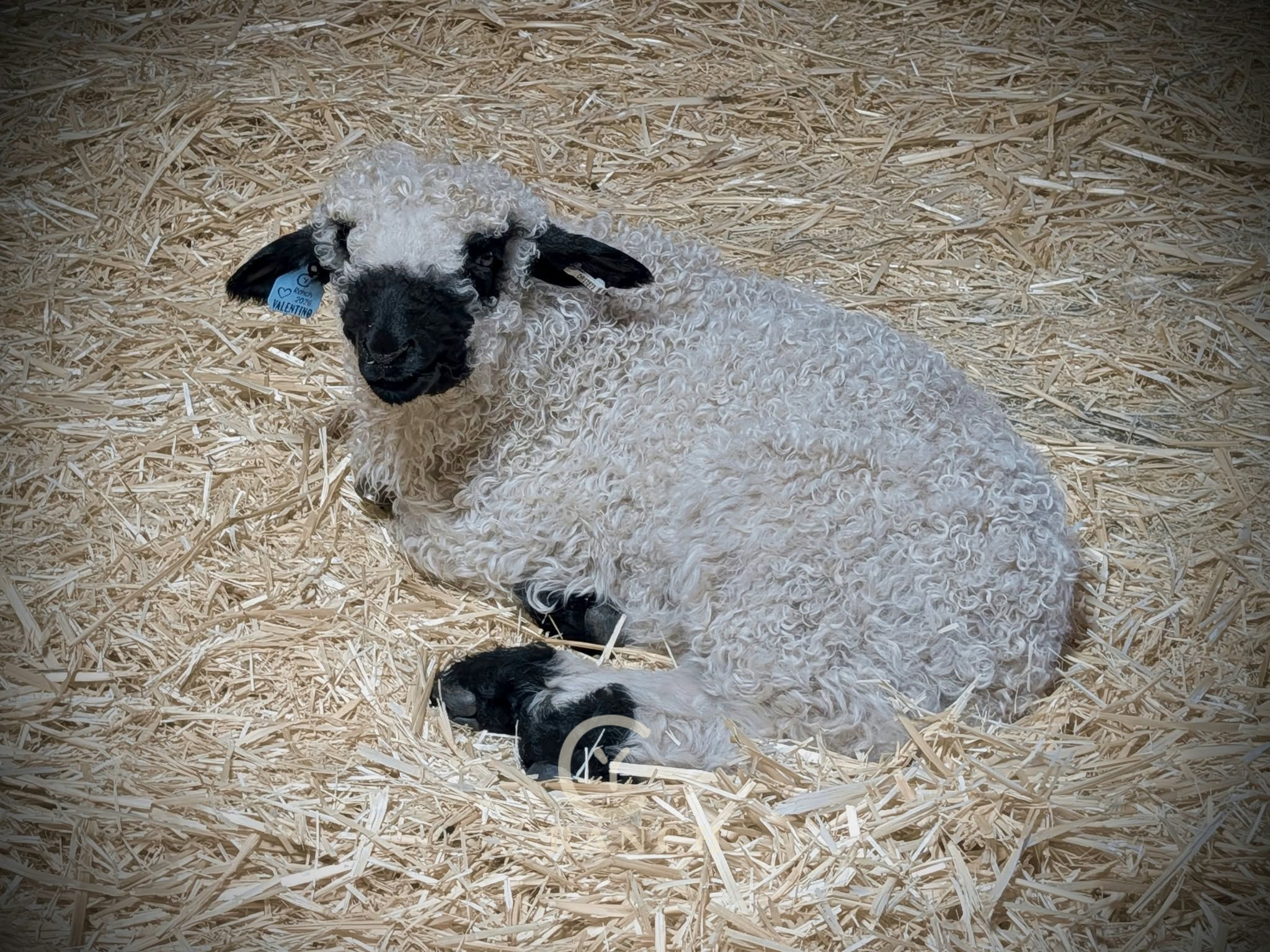
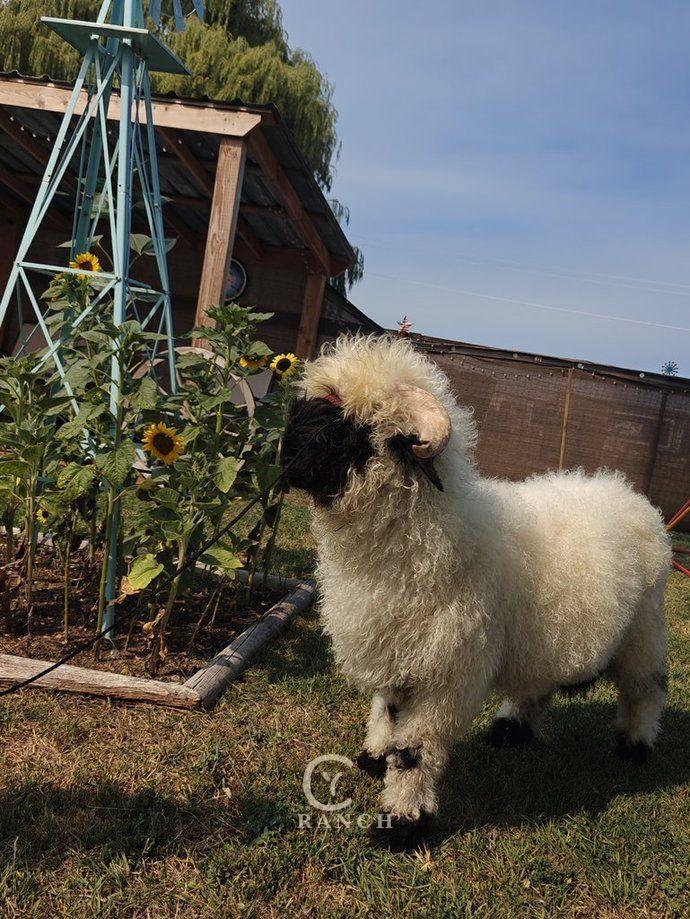
Few sheep are as instantly recognizable as the Valais Blacknose. Their striking black faces and ears contrast with abundant white fleece, while black markings around the knees, hocks, and lower legs complete their distinctive appearance. Both rams and ewes develop impressive spiral horns, although their shape and thickness differ between the sexes. These markings and physical characteristics are important features of the traditional breed standard, not simply decorative details.
The breed's beauty is supported by the structure of a substantial mountain sheep. Strong legs, sound hooves, balanced movement, and good overall conformation are essential qualities in animals whose ancestors grazed the difficult terrain of the Swiss Alps. The Valais Blacknose was developed to be a functional sheep, and its traditional appearance is only one part of what makes the breed worth preserving.
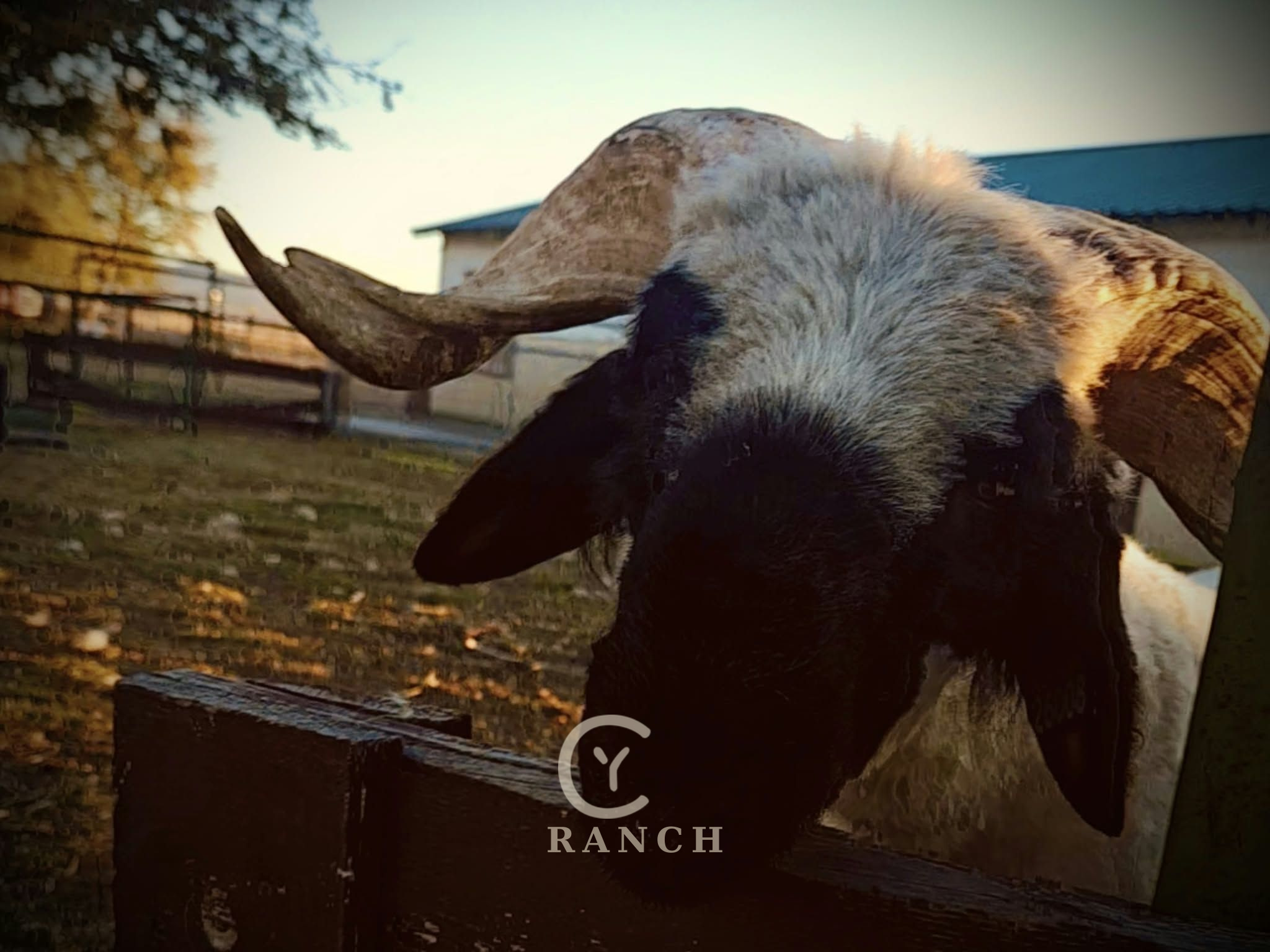
Fleece and friendly temperament
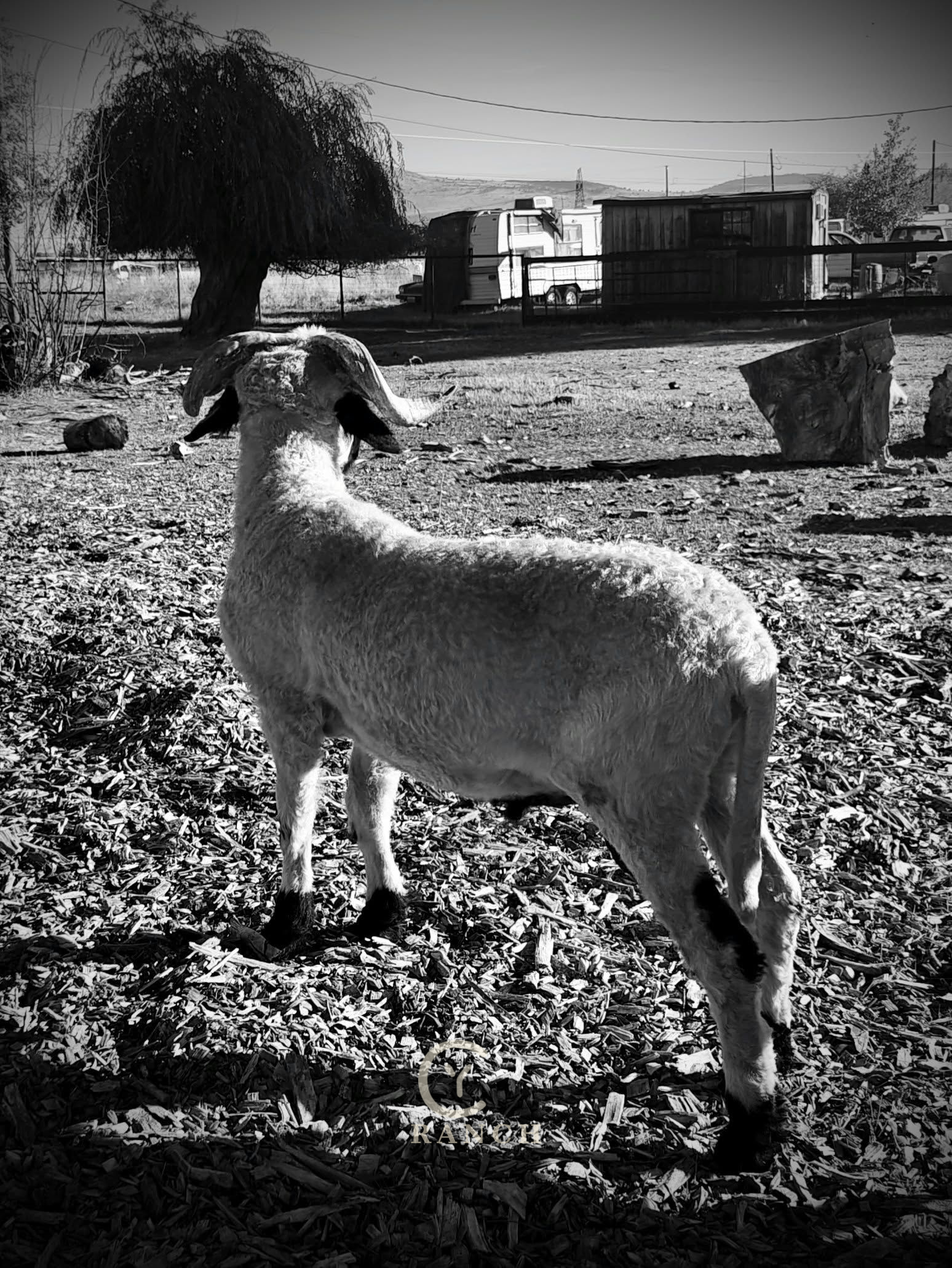
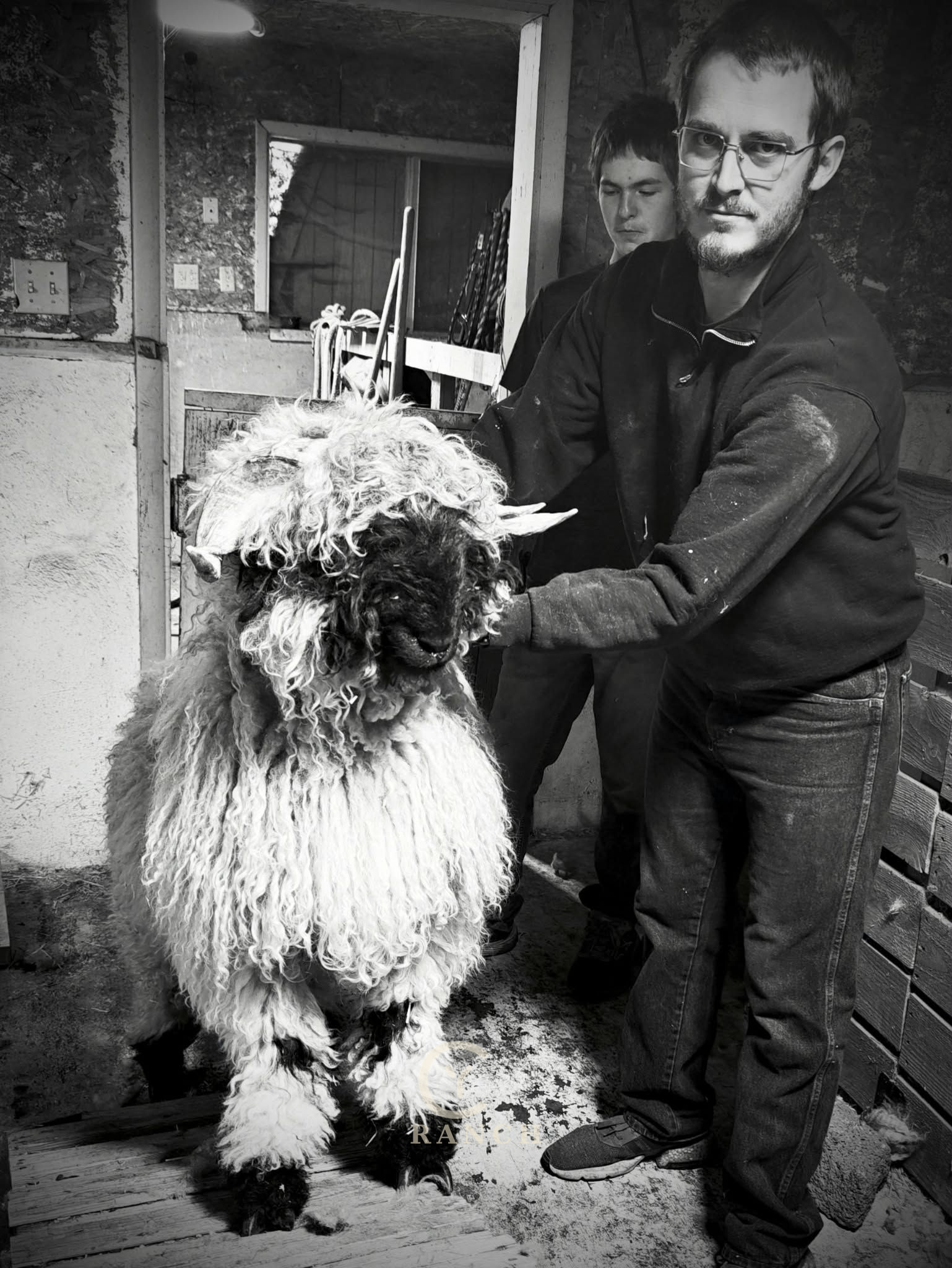
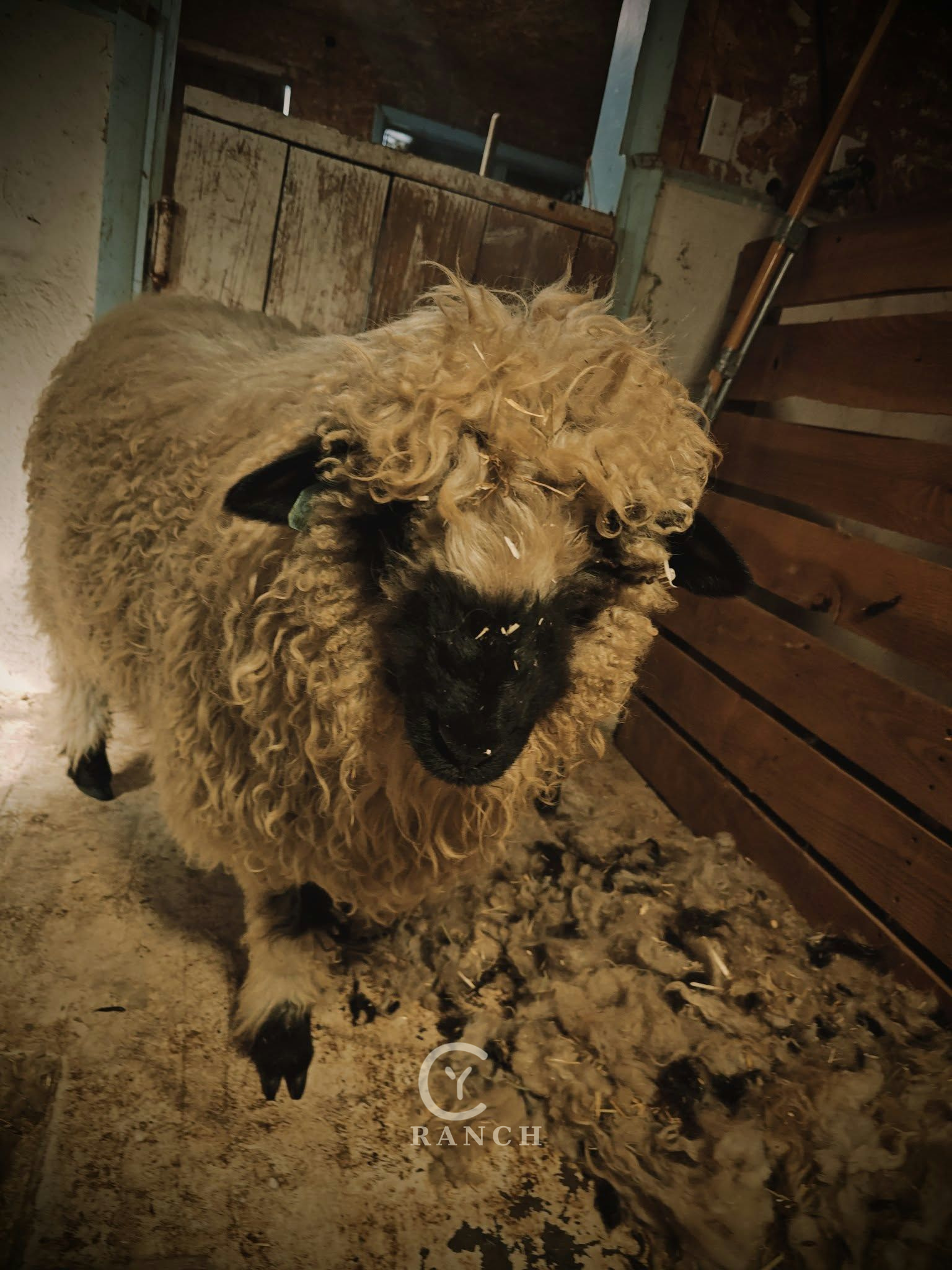
Their extraordinary wool is another defining characteristic. Long locks cover much of the body, including the head and legs, giving the sheep their famously shaggy appearance. Although young lambs may have wonderfully soft curls, the fleece generally becomes coarser as the animals mature. Traditionally valued for practical fiber uses, Valais wool remains useful for felting, rugs, and other durable wool products.
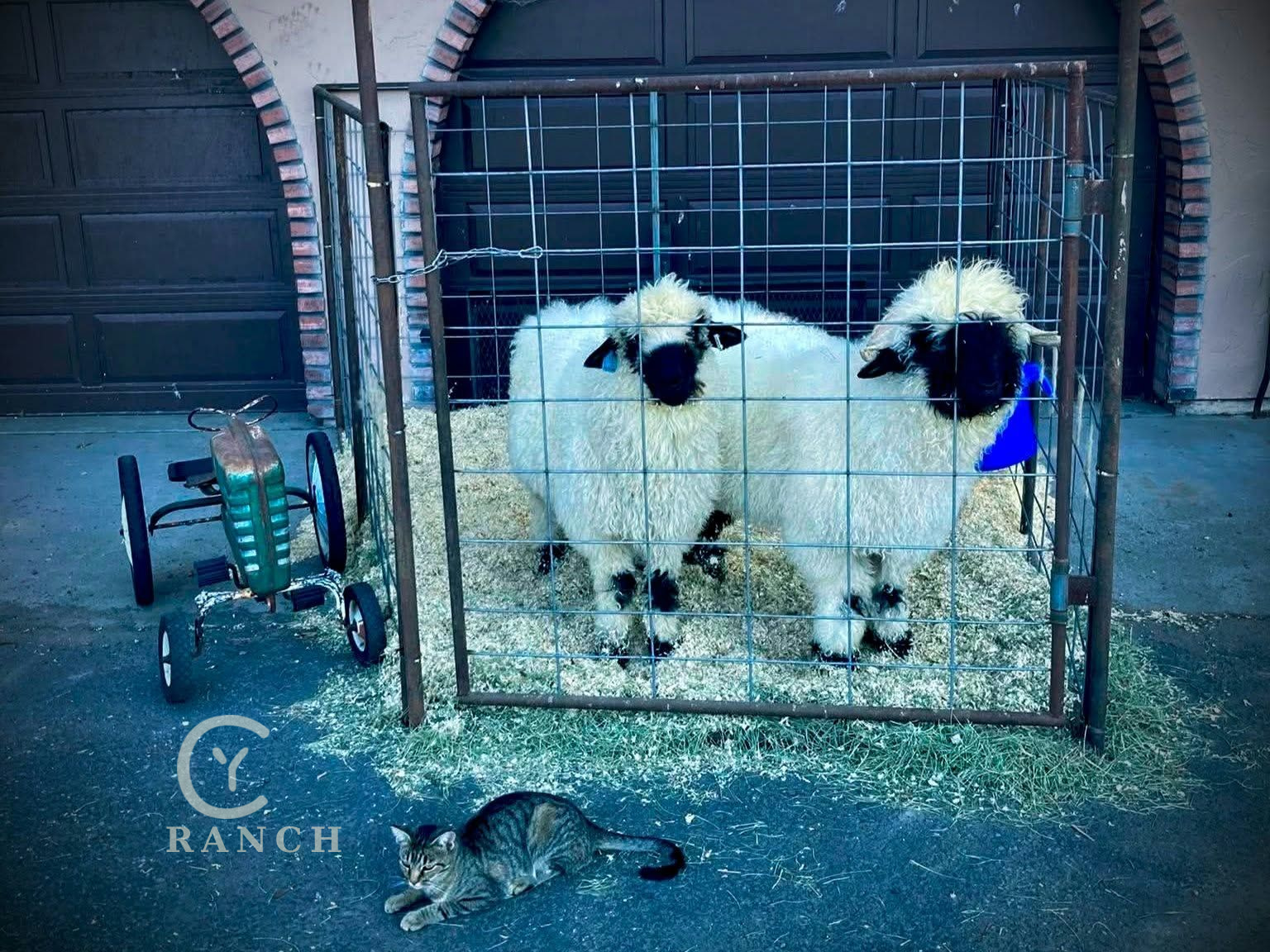
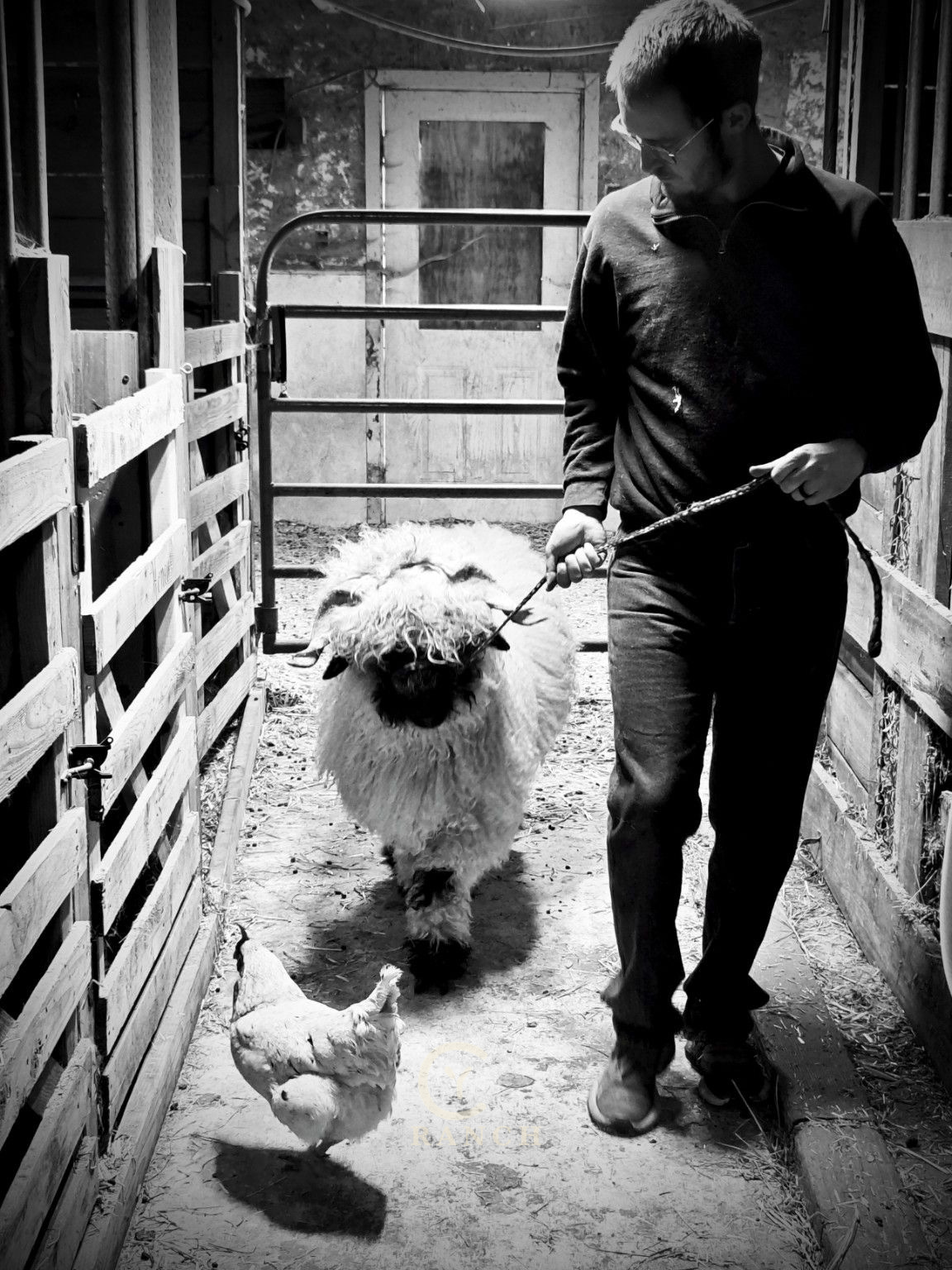
One of the qualities that has made these sheep particularly special to our family is their temperament. Valais Blacknose sheep are widely appreciated for their friendly, inquisitive nature, and our own flock has more than lived up to that reputation. They recognize familiar people, eagerly approach for attention, and genuinely seem to enjoy being part of whatever is happening around the ranch. Every animal has its own personality, but the affection and curiosity of our flock have completely changed the way we think about raising sheep.
A Beautiful Breed with Practical Roots
The Valais Blacknose originated as a dual-purpose sheep, traditionally raised for both wool and meat. Their dense coats helped protect them in demanding mountain conditions, and their ability to graze rugged pastures made them useful to generations of Alpine farmers. While their appearance has brought them considerable attention in recent years, their history as working livestock deserves equal appreciation.
That remarkable fleece also requires attentive care. Valais Blacknose sheep are generally shorn twice each year, and their heavy wool growth makes regular monitoring especially important. Proper fleece management, balanced nutrition, and routine health care help keep these animals comfortable throughout the changing seasons.
Feet and mobility deserve particular attention. Regular inspection, appropriate trimming when needed, sound management, and attention to the breed's structural qualities all play an important role in responsible ownership, particularly when moisture, debris, and wool around the feet create unfavorable conditions.
At CY Ranch, preserving a heritage breed means caring for the entire animal. Correct markings and beautiful fleece are wonderful, but healthy, structurally sound sheep with good mobility and quality of life are equally important.
An unlikely journey
From the Swiss Alps to American Pastures
For many years, Valais Blacknose sheep were little more than a distant dream for American livestock enthusiasts. Strict animal import regulations made bringing live sheep directly from Europe exceptionally difficult, particularly because of disease-control requirements involving illnesses such as scrapie. American breeders who admired the breed had to find another path.
That opportunity began taking shape in 2017 when imported semen from purebred Valais Blacknose rams allowed American breeders to establish structured upgrading programs. By breeding carefully selected foundation ewes to approved Valais genetics and continuing that process across generations, breeders could gradually increase the percentage of Valais ancestry within their flocks.
In 2020, the first fullblood Valais Blacknose embryos were imported into the United States from New Zealand. This milestone was followed by the first documented American-born fullblood Valais Blacknose lamb in January 2021. These developments opened new opportunities to establish and improve Valais Blacknose breeding populations in America.
The arrival of these genetics represents years of planning, international cooperation, careful breeding, and dedication. For families who once believed owning these sheep would never be possible, the creation of American breeding programs transformed admiration into an opportunity to participate in the breed's future.
Generations of purposeful breeding
Building a Breed, One Generation at a Time
Because purebred Valais Blacknose sheep were initially so difficult to obtain in the United States, American breeders developed structured programs to increase Valais genetics over successive generations. This process, often called breeding up or upgrading, begins with foundation sheep from another breed and uses Valais Blacknose breeding stock to gradually produce offspring with increasingly high percentages of Valais ancestry.
CY Ranch participates in the Valais Blacknose Sheep Society, or VBSS, and uses its registration and upgrading framework to guide our flock's development. The society maintains pedigrees and registration records while establishing standards for eligibility, parentage verification, and breed characteristics. These records allow breeders to document progress across generations and make informed decisions about the animals they produce.
Although genetic percentages are an important part of this process, they are not the only consideration. The traditional Valais Blacknose standard includes correct markings, fleece, structure, horns, and overall soundness. Our goal is to develop animals that reflect those qualities as faithfully as possible, rather than focusing on percentage alone.
| Generation | Valais ancestry | VBSS category |
|---|---|---|
| F1 | 50% | Recorded Stock |
| F2 | 75% | Recorded Stock |
| F3 | 87.5% | Registered Stock |
| F4 | 93.75% | Registered Stock |
| F5 | Approximately 96.88% | American Purebred |
| Fullblood | 100% | Purebred Stock |
These percentages illustrate the standard progression when each generation is bred to a 100% Valais Blacknose sire. Percentage alone does not establish registration eligibility. Current VBSS pedigree, DNA parentage, breed-standard, and breeding eligibility requirements apply, and society rules can change. Public CY Ranch animal cards display only the classification supplied in each animal's validated public record.
From a distant dream to our own pastures
Worth the Wait
Our fascination with Valais Blacknose sheep began more than a decade before we ever had the opportunity to own one. The first time we saw these extraordinary animals, with their beautiful curling horns, woolly faces, and unmistakable appearance, we fell completely in love with them. We spent time learning about the breed, only to discover that bringing them to the United States wasn't a realistic possibility at the time. For years, they remained something we could admire from afar.
When we eventually learned that Valais Blacknose genetics had become available to American breeders, that long-held dream suddenly seemed possible. We began researching the breed-up process and eventually welcomed three F1 Gotland-cross ewes to CY Ranch. We were excited about their appearance and the possibilities for our breeding program, but we were still a little uncertain about what raising sheep would actually be like.
Our previous experience with sheep had come through our son's 4-H projects, where we worked with Suffolk-cross market lambs. Those particular sheep were wary of people, and handling them often required considerable patience and effort. We knew those experiences didn't represent every breed or every individual sheep, but they had certainly left us with some reservations about starting another flock.
Our Valais-cross girls changed our minds almost immediately. They came running when they saw us, eagerly sought attention, and quickly made it clear that being around people was something they enjoyed. They love scratches, investigate whatever we're doing, and have some of the sweetest personalities of any animals we've raised. We had initially fallen in love with the Valais Blacknose for their appearance, but it was their affectionate and curious personalities that truly won us over.
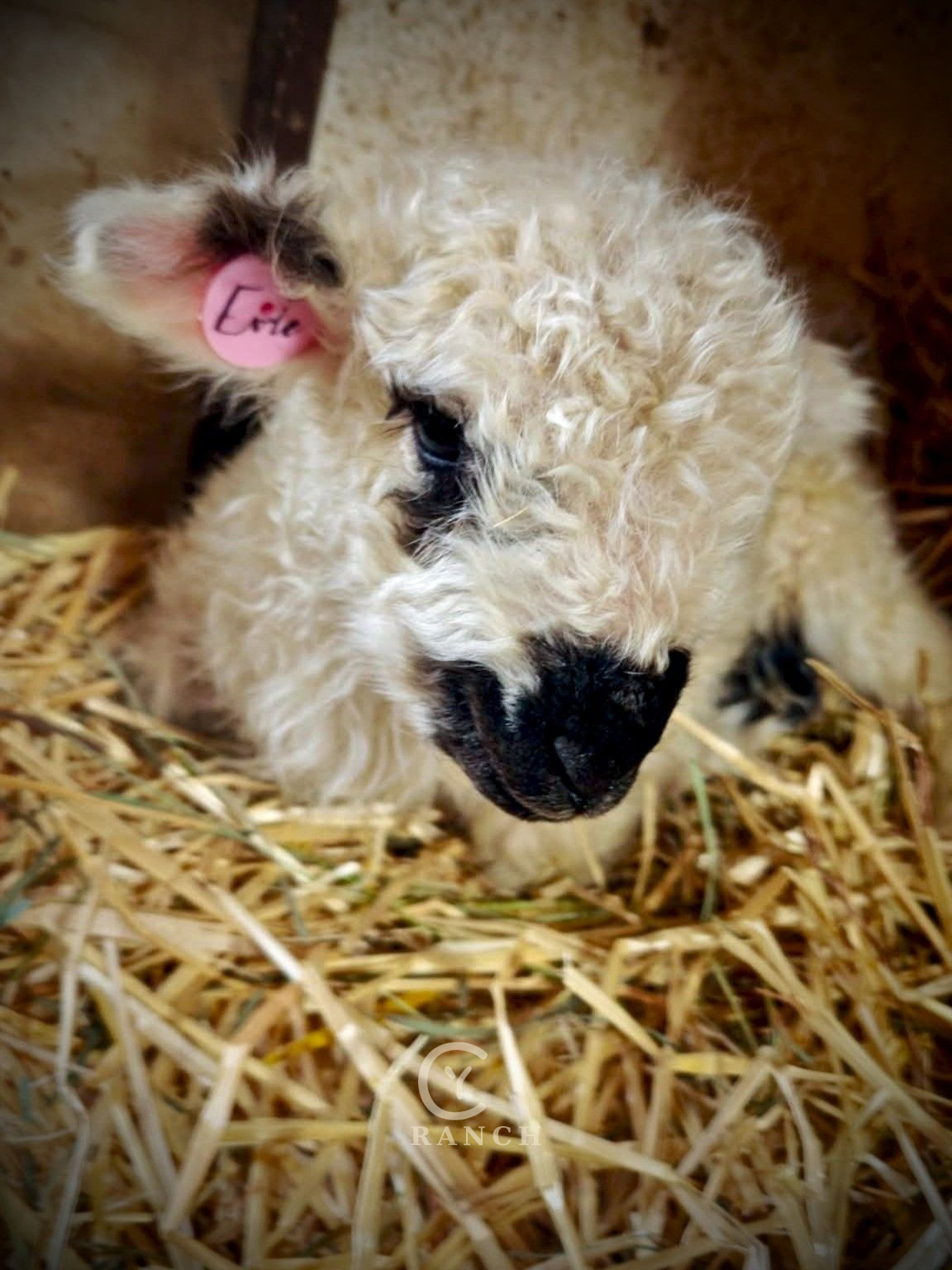
In 2025, we welcomed Evie, our first F2 lamb, and she quickly captured the hearts of everyone at CY Ranch. Seeing that next generation arrive made the years of waiting and planning feel especially worthwhile. Then, in 2026, we welcomed our first purebred Valais Blacknose ram, an exciting milestone that opened new possibilities for our flock. What began more than a decade ago as a fascination with a breed we never imagined owning has become a genuinely rewarding journey. We have come to love not only the sheep themselves, but the opportunity to help carry forward a remarkable breed's heritage here in the United States.
Breeding with purpose
Preserving What Makes a Valais a Valais
At CY Ranch, our breeding philosophy is rooted in a deep appreciation for the history and character of traditional livestock breeds. We believe there is something special about an animal that still reflects the qualities generations of breeders worked to develop. With our Valais Blacknose sheep, our goal is to honor that history by producing animals that increasingly resemble the traditional Swiss breed in appearance, structure, temperament, and overall quality.
We recognize that breeders pursue many different goals. Some enjoy developing new varieties, exploring different crosses, or finding innovative ways for livestock to serve modern agricultural needs. That work can be fascinating and valuable, and we appreciate the thought and dedication that goes into it. Our own interests simply lean toward preservation. Much as someone might lovingly restore a classic vehicle to its original character, we find satisfaction in maintaining the distinctive qualities that made a heritage breed special in the first place.
For us, the Valais Blacknose is more than its beautiful black face and extraordinary fleece. The traditional markings, sweeping horns, sound conformation, strong feet, and practical qualities developed through generations of Alpine farming are all important parts of its identity. We want those characteristics to guide our decisions as our flock progresses through the breed-up generations. Reaching a higher percentage of Valais ancestry is exciting, but the quality and correctness of each animal matter just as much.
Our breeding program is a long-term commitment, and we understand that achieving our goals will take patience, careful selection, and continued learning. We hope that, with each generation, our flock will more closely reflect the sheep that captured our admiration so many years ago. Preserving that heritage, while raising healthy, well-cared-for animals we genuinely enjoy, is what makes this journey meaningful to us.
The flock
Meet Our Valais Blacknose Sheep
Get to know the sheep who make our Valais Blacknose breeding program so special. Explore their public profiles, photographs, pedigrees, breed-up generations, and the individual personalities that make each member of our flock unique.
References
Sources & Further Reading
- Valais Blacknose Sheep Society
- Valais Blacknose Sheep Society: Official Breed Standard
- Valais Blacknose Sheep Society: Bylaws, Registry Rules, and Upgrading Policy
- Valais Blacknose Sheep Society: Registry and DNA Guidance
- American Valais Blacknose Sheep Registry: History of the Breed
- British Valais Blacknose Sheep Society: Breed History and Standard